Moving Past a Legacy P2P Suite: Bitso’s Story



Table of content

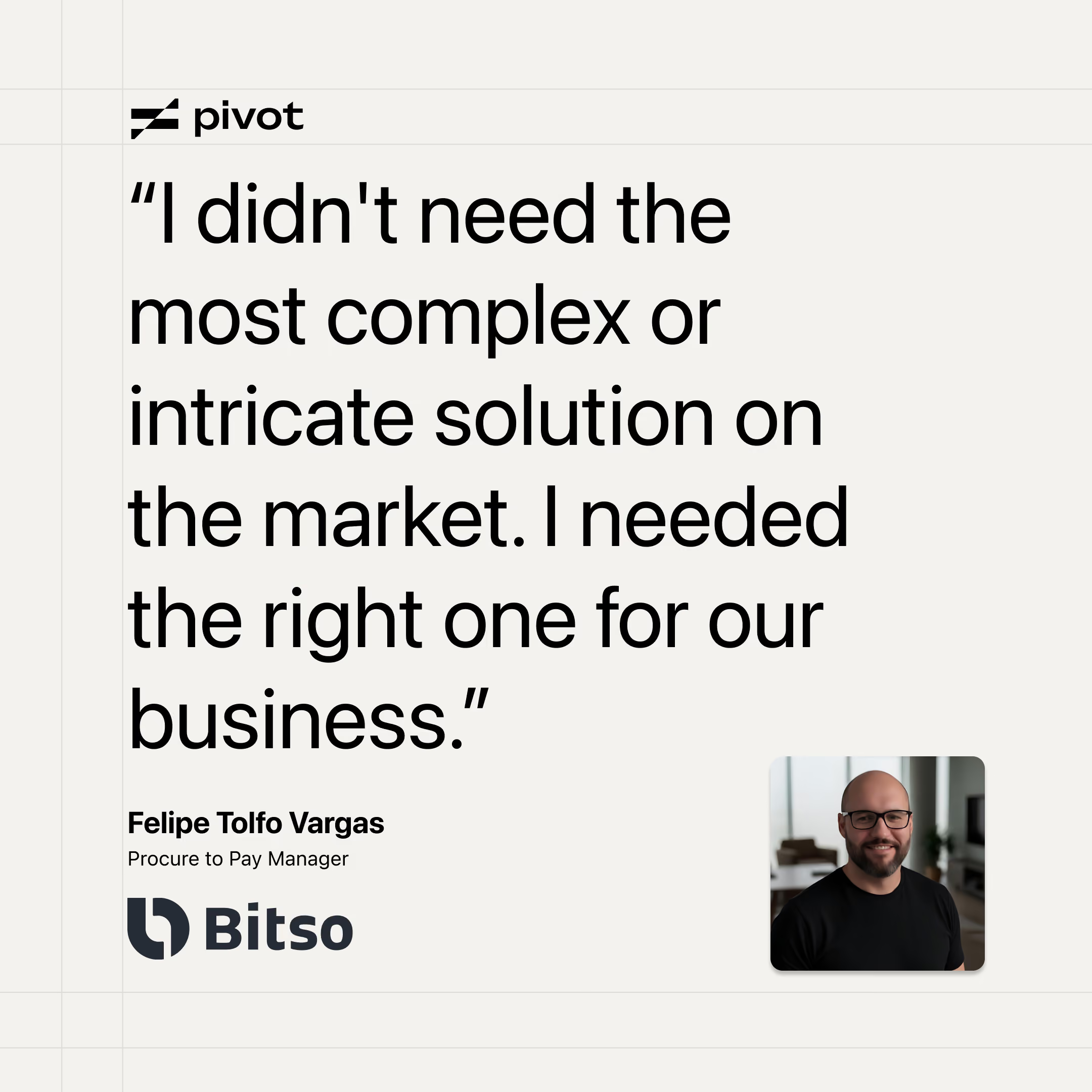
Felipe's words echo a sentiment many procurement leaders recognize but rarely articulate: the most complex system isn’t always the right one.
For Bitso, the mismatch eventually became hard to ignore, raising a key question many face: when a system stops serving the business, do you customize and adapt it further or replace it entirely?
About Bitso
Founded in 2014 and headquartered in Mexico City, Bitso is Latin America's leading digital financial services company, serving over 10 million users across major regional markets. As a regulated bridge between traditional fiat and digital assets, its consumer platform supports 200+ cryptocurrencies, U.S. stocks and ETFs, and yield opportunities.
Its B2B segment, Bitso Business, serves more than 1,900 institutional clients and powers cross-border payments through stablecoin infrastructure, enabling transactions in minutes rather than days. With approximately 10% of US-Mexico remittance flow running through its platform, Bitso is now finalizing its evolution into a financial "super-app," blending digital assets, traditional equities, and fiat payments into one unified ecosystem. Learn more about Bitso below.
The low adoption challenge many procurement leaders face
Low adoption of procurement processes is one of the most common and costly challenges procurement leaders face, and it rarely announces itself. Instead, it appears in workarounds and shadow processes that result from requests arriving with an invoice already attached. For Bitso, that was the reality, creating friction and reducing visibility.
For Bitso, rigid legacy technology created friction and reduced visibility, as their previous end-to-end system was too complex for a lean, fast-moving company. This architecture imposed high maintenance costs, steep learning curves, and a constant need for expensive additional modules. To regain agility, the company is now optimizing its Procure-to-Pay processes through a single, unified tool designed for total automation. By prioritizing simplicity and AI, Bitso aims to eliminate manual effort and ensure that back-office efficiency finally matches the speed of its digital financial ecosystem.
To customize a legacy system or replace it entirely?
When low adoption persists despite training, change management, and process redesign, it becomes clear that the problem is systemic. Procurement leaders eventually face a fundamental choice: To spend more resources customizing an existing system or replace it entirely.
- Customizing a legacy system often comes with hidden costs, rigid dependencies, and complex configurations. It can become expensive to maintain and difficult to adopt, compromising the visibility and control that procurement exists to provide.
- Replacing the system offers a different path. It can create a clean slate for faster implementation, improved adoption, and the flexibility to scale with the business. But it also comes with its own friction. It requires change management, a sound business case, and the right internal owner, especially for a function as operationally critical as procurement.
For Bitso, the decision was not theoretical. Their previous implementation had taken eight months to go live, a timeline the business did not seek to repeat. Before committing to either path, the team needed to define what a successful implementation would look like.
Bitso’s case for a replacement
Operating in 8 key regions (with primary focus in Mexico, Brazil, Argentina, and Colombia), a lean Procure-to-Pay team, fragmented processes, and low adoption made a strong case for replacing their legacy tech.
Felipe was looking for “a tool flexible enough to adapt to a business that regularly restructures its cost centers, simple enough that a lean procurement team could own it without external headcount, fast enough to get us live in half the time as our previous solution, and structurally sound enough to handle the compliance demands of operating across multiple geographies.”
The replacement needed to be:
- Flexible: able to adapt to frequent changes in cost centers and processes, without relying on consultants
- Simple to operate: manageable by a lean team without adding headcount
- Fast to implement: significantly shorter rollout than their previous system
- Centralized: one place to manage requests, approvals, vendors, and invoices
- Easy to adopt: intuitive enough to reduce training and drive usage across teams
With those requirements defined, Bitso chose Pivot and began implementation.
Bitso’s Implementation of Pivot
An early sign of success after implementing Pivot was strong adoption. The project started with Felipe, who championed the change from day one and drove adoption across the business.
The factors made the difference were:
- Shorter implementation timeline: Pivot was implemented in 4 months, allowing the team to go live faster and have a quicker time to value.
- Lower implementation cost and reduced external dependency: The implementation required roughly half the cost and was managed internally, without relying on external consultants, which simplified coordination and ongoing maintenance.
- Flexible configuration and clearer process tracking: Pivot enabled the team to easily configure workflows and fields as needed and provided a centralized view of requests, approvals, and spend, making processes simpler to follow and manage.
- End-to-end high-performance ecosystem: Bitso modernized the Procure-to-Pay process to drive cost efficiency and provide a superior experience for the P2P team, requesters, approvers, and vendors.
Final thoughts: Replacing legacy tech is less daunting than some may think
Many procurement leaders will face the customize or replace decision during renewal, and often with a price increase. The system that got the business here stops serving where it's going, not dramatically, but gradually. The instinct is often to further customize, because it feels less disruptive and easier to justify internally. In practice, the greater risk is not in replacing a system, but in continuing to invest in one that cannot keep up with the demands and pressure of modern enterprise procurement.
The more important question is whether the organization is ready to implement a replacement correctly with executive buy-in, a clear internal owner, and a vendor that treats implementation as part of the engagement. For Bitso, replacing its legacy tech with Pivot gave a lean procurement team operating across multiple countries the visibility and control to run procurement as a strategic function.
Curious to learn how Pivot could support your team? Get in touch with us.
More about Bitso
Founded in 2014 and headquartered in Mexico City, Bitso is the leading digital financial services company in Latin America, serving over 10 million users across major regional markets. As a regulated bridge between traditional fiat and digital assets, it offers a comprehensive suite of individual services through its mobile and professional platforms. Beyond supporting over 200 cryptocurrencies, the ecosystem now includes access to thousands of U.S. stocks and ETFs, weekly yield opportunities on select assets, and high-security standards verified by monthly technical proof of solvency.
Bitso Business, the company’s B2B segment, serves more than 1,900 institutional clients and provides infrastructure for local and cross-border payments that enables global companies to move money instantly and efficiently across markets.
By utilizing stablecoin infrastructure, businesses can execute cross-border transactions in minutes rather than days, bypassing the friction of traditional banking. This system allows companies to manage local pay-ins and payouts in various regional currencies through a single API, making it a vital tool for firms requiring 24/7 liquidity and reduced volatility risk during international transfers.
Bitso distinguishes itself through deep regulatory integration and market leadership, currently handling approximately 10% of the remittance flow between the United States and Mexico. By replacing slow traditional banking rails with efficient blockchain technology, the platform offers a more agile alternative for global money movement. As of 2026, Bitso is finalizing its evolution into a financial "super-app," seamlessly blending digital assets, traditional equities, and fiat payments into one unified, user-centric ecosystem.