Top 5 Source-to-Pay Platforms to Explore in 2026


.jpg)
Table of contents

What are Source-to-Pay Platforms?
Source-to-Pay (S2P) platforms cover the end-to-end procurement process, from strategic sourcing, all the way through purchase requests, payments, and reconciliation. For any S2P platform to truly deliver, it needs to integrate seamlessly with your ERP and act as the financial backbone of your entire procurement operation.
But not all S2P platforms are created equal, and who they were built for matters more than most buyers realize.
The original S2P platforms were built for enterprise. Powerful, yes. But also heavy, complex, and designed for organizations with the resources to match. A new generation of modern platforms has since emerged, faster to implement, easier to adopt, and built to scale with the businesses that need them most.
Today, the market spans both worlds, from established enterprise giants to leaner, more modern alternatives. The question is no longer just functionality. It's fit.
Who needs a Source-to-Pay platform (and why)
There are three scenarios where this decision becomes unavoidable:
- You don't have source-to-pay right now and are missing out on key value drivers for your organization. At some point, you'll need one.
- You have a decentralized setup: one tool for P2P, sourcing handled somewhere else, and the lack of connectivity is starting to cost you visibility and control.
- You have an enterprise S2P tool that's too heavy, too complex, and barely adopted. You're paying for something your team works around rather than with.
The question to ask yourself isn't whether a platform covers the full S2P spectrum on paper, it's how deeply those capabilities are actually built, and whether they'll hold up as your operations scale.
We've hand-picked the platforms that offer true end-to-end S2P coverage, from the established enterprise giants to the modern alternatives built for speed and scale. Read on to get the scoop.
Top Source-to-Pay platforms in a nutshell
(Source: G2, 2026)
Top five Source-to-Pay platforms
Here are the top five S2P platforms to explore in 2026 that could handle your procurement needs.
Pivot
Year founded: 2023
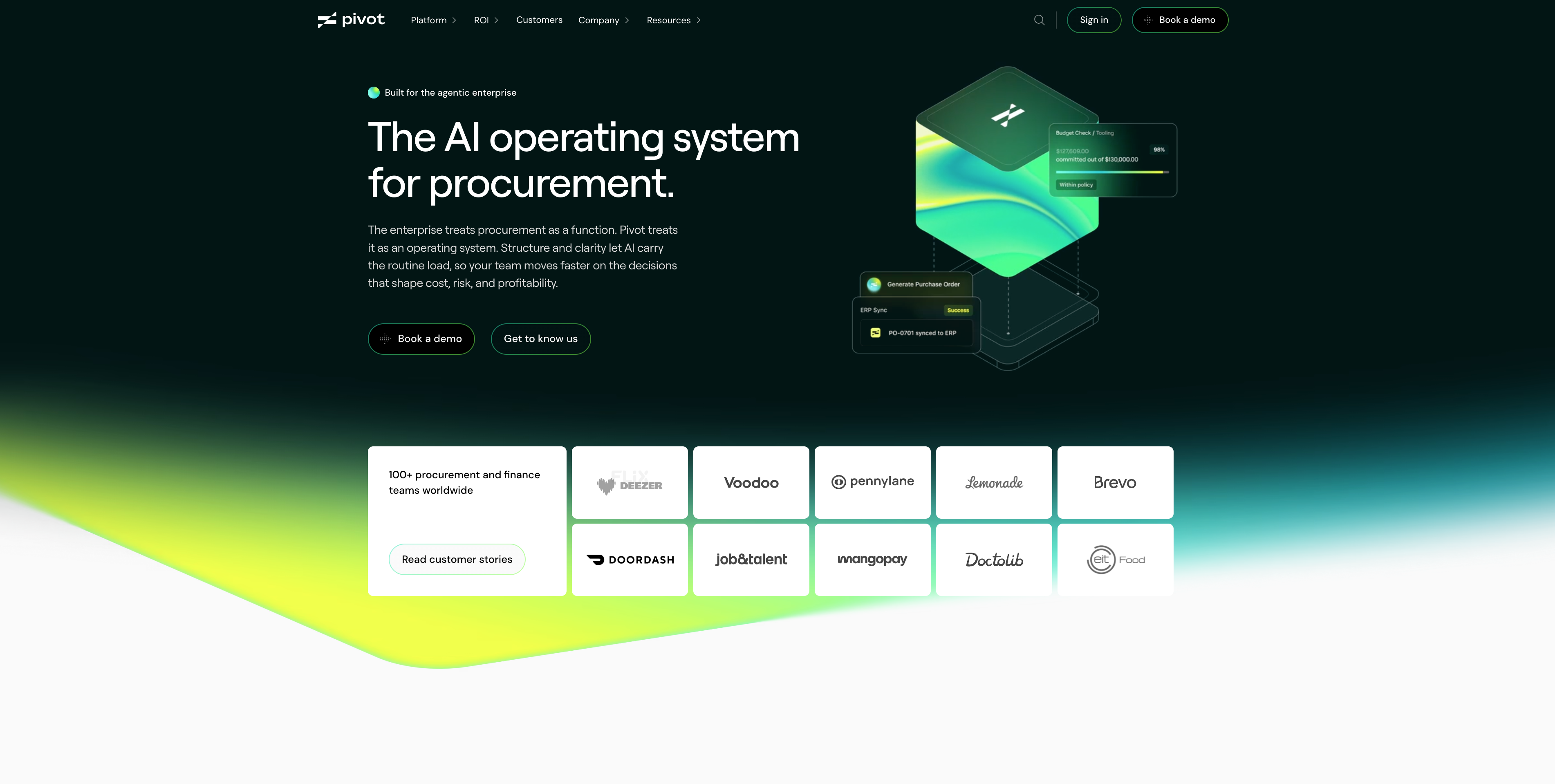
Pivot is the AI operating system for procurement built for enterprise companies that need spend control and visibility without the implementation headache that typically comes with enterprise tools. It covers the full source-to-pay process and integrates natively with ERPs and the broader tech stack, positioning itself as a financial backbone for procurement operations.
Pivot pros:
- Deeply native ERP integrations, including multi-ERP integrations.
- Source-to-pay capabilities
- Quick implementation times
- Quick and easy to adopt
- Pricing transparency
G2 rating: 5/5
(Source: G2)
Coupa
Year founded: 2006
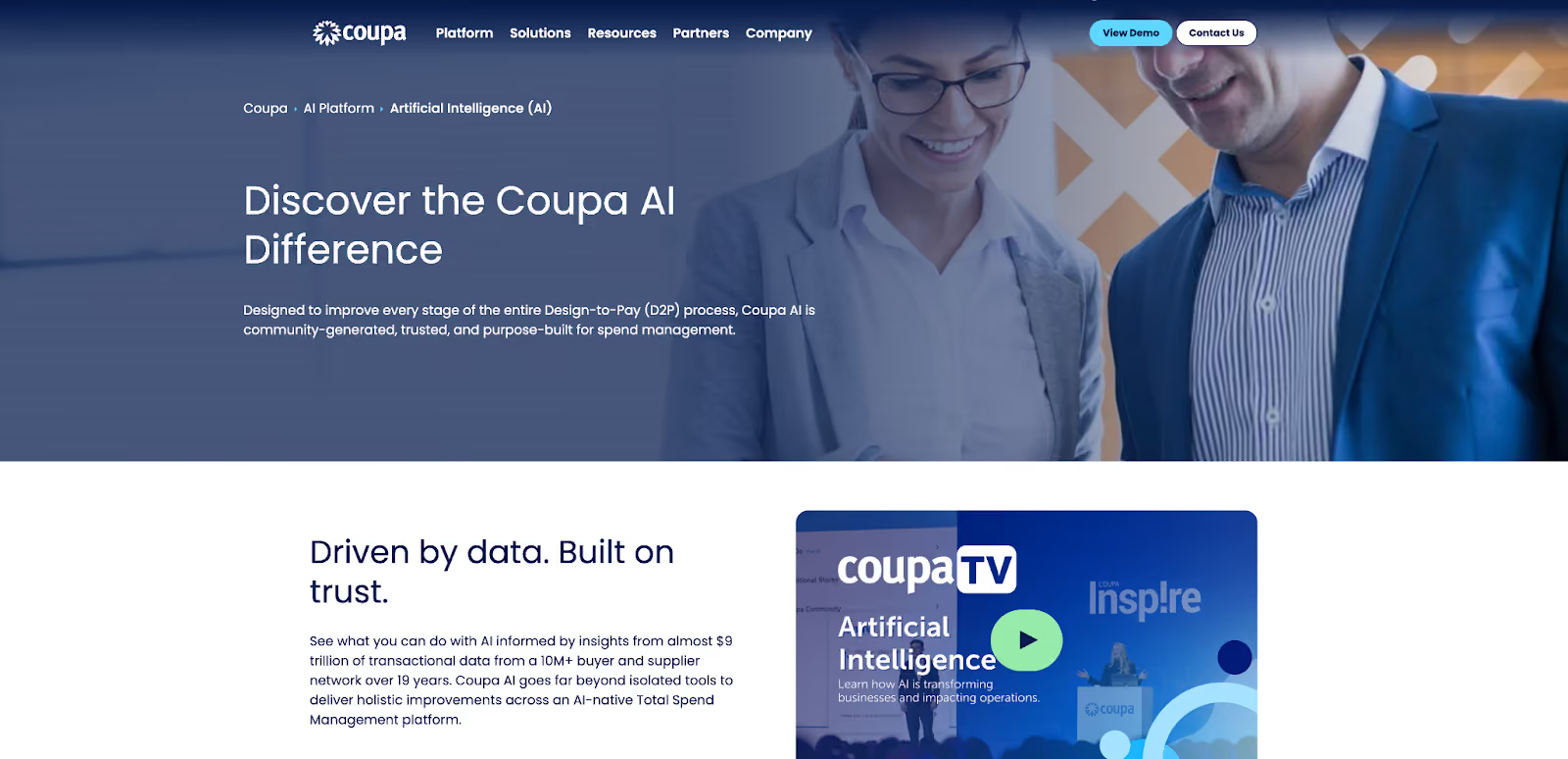
Coupa is a cloud-based business spend management platform covering source-to-contract, procure-to-pay, AP automation, and treasury and cash management, designed for mid-to-large enterprises. It positions itself as a broad spend management suite rather than a purely procurement-focused tool.
Coupa pros:
- Features
- Efficiency
- Ease of use
G2 rating: 4.2/5
(Source: G2)
SAP Ariba
Year founded: 1996
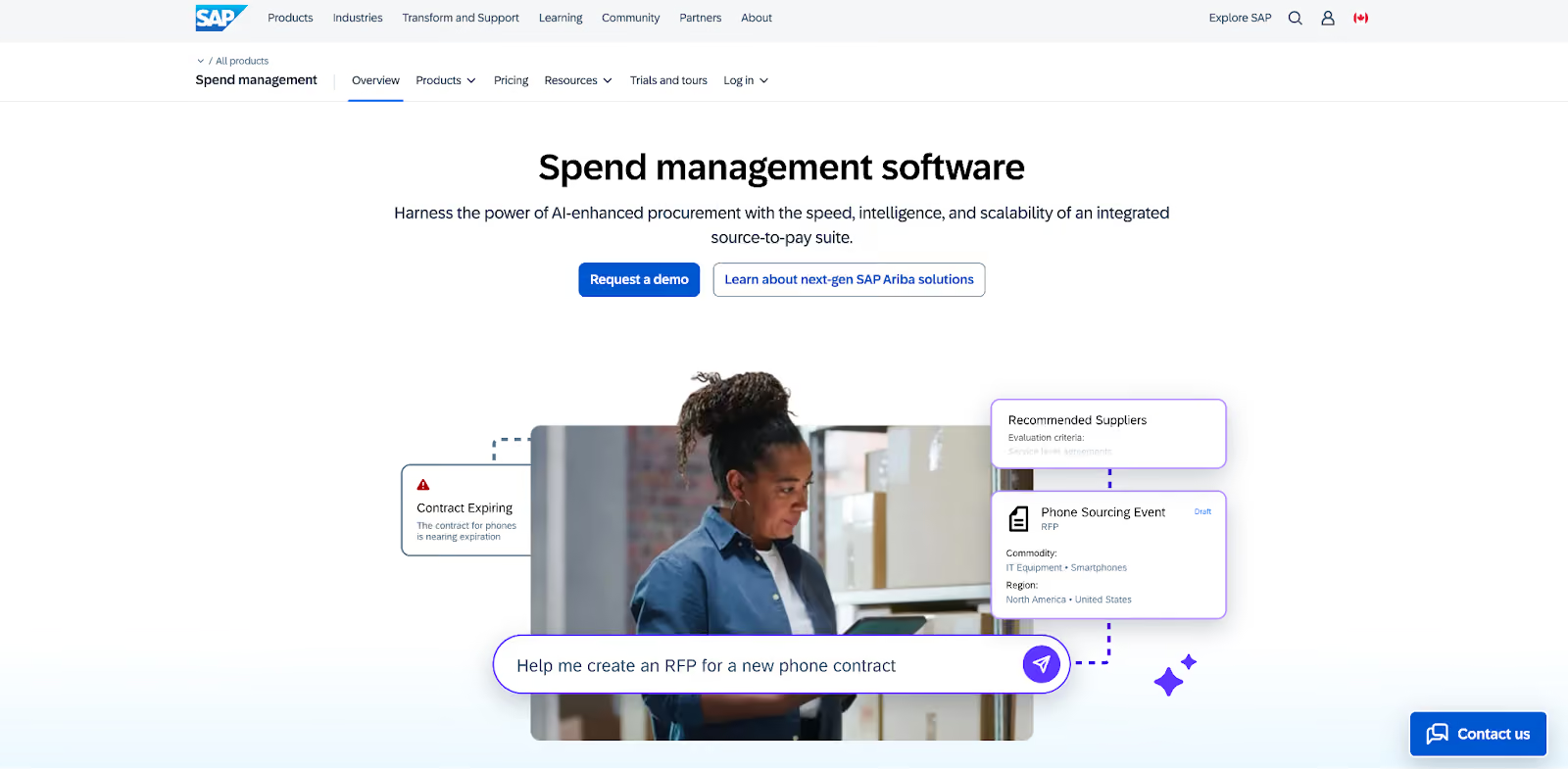
SAP Ariba is a cloud-based source-to-pay platform covering sourcing, contract management, procurement, and invoicing, designed for mid-to-large enterprises. It is commonly used alongside other SAP products such as SAP Fieldglass for workforce management and SAP Concur for travel and expense, and integrates deeply with SAP S/4HANA, making it a natural fit for businesses already running on the SAP ecosystem.
SAP Ariba pros:
- Strong supplier collaboration capabilities
- Procurement process; benefiting from streamlined workflows and supplier collaboration
- Efficiency, specifically invoices uploaded and a streamlined procurement process
G2 rating: 4.1/5
(Source: G2)
GEP SMART
Year founded: 1999
GEP SMART is a cloud-native source-to-pay platform covering sourcing, contract management, procurement, and accounts payable, designed primarily for large enterprises. The platform is notable for combining software with optional managed services, meaning companies can outsource parts of their procurement operations to GEP directly alongside using the tool
GEP SMART pros:
- 24/7 customer support that users rate highly for responsiveness
- Strong automation across sourcing, approvals, and invoice processing
- Flexible integrations that connect well with major ERPs and third party tools
G2 rating: 4.3/5
(Source: G2)
Zycus
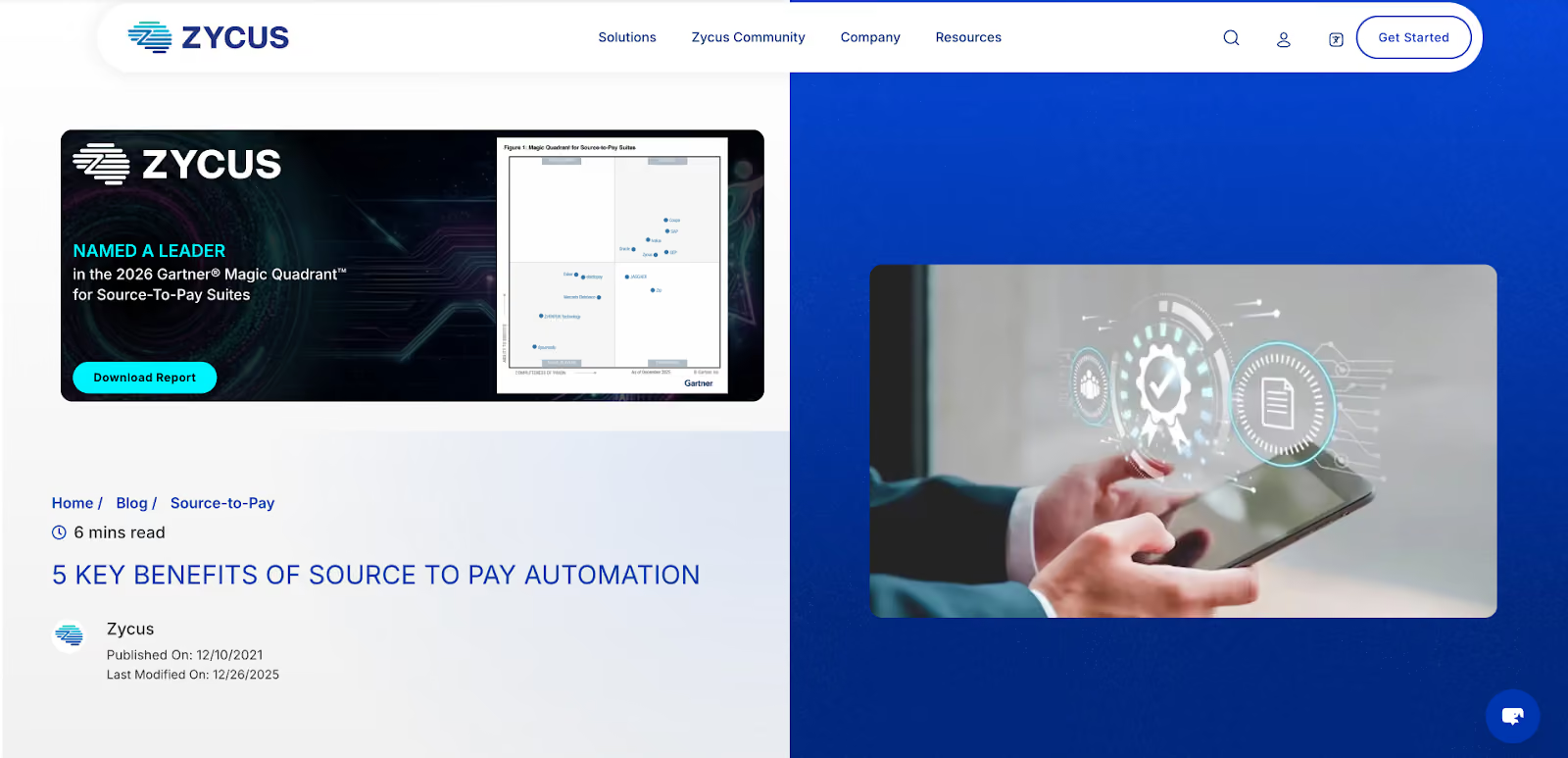
Zycus is a source-to-pay platform covering sourcing, contracts, procurement, invoicing, and spend analysis, targeting mid-to-large enterprises. The company has leaned heavily into AI over the years, most notably with its Merlin AI suite embedded across the platform, positioning itself as an AI-first procurement solution.
Zycus pros:
- Intuitive and easy to navigate
- Strong AI-powered automation across the procurement cycle
- Simple RFP and contract creation tools
G2 rating: 3.6/5
(Source: G2)
Tips to choose the best source-to-pay solution
Assess your business needs (and plans)
Before even thinking about evaluating a solution, even if a logo or famous brand comes to mind, be sure to look inside your business first. Assess your current procurement processes, teams, and areas of improvement. Think about what works, what doesn’t work, and where you see areas for improvement.
While this exercise naturally requires you to look in the present, it’s important to not limit yourself to your business’s current needs. Consider future expansion plans, hiring plans that might bring on extra headcount, new countries, more entities…the list goes on.
Define a scope based off how your stakeholders buy
A source-to-pay tool should really be a reflection of how your business behaves. If your teams are using Slack to communicate about procurement related activities, consider tools that have deep Slack integrations. It would be in your best interest to find a solution that integrates not only in your stack but also in your company culture. While the solution’s features should indeed cover your procurement needs, the way they cover it is equally as important.
Don’t let “AI” take you away from the basics
“AI” is everywhere, and while it’s indeed powerful, the type of AI and how your organization intends to use AI is more important. Bearing in mind that your procurement process needs clean data and sound financial hygiene before going full out when it comes to AI, especially agentic. The solution that will handle your procurement needs responsibly and use AI as an augmentor or accelerator is the way to go.
How Pivot supports end-to-end control and scale
Nobody carries a separate camera, music player, GPS, and calendar anymore because one smartphone that does it all beats five best-in-class devices every time. Especially when you need to move fast with less. So, why is procurement any different? For too many companies, it still is.
Control
The decisions you make upstream set the conditions for everything downstream. Who you contract with, what terms you agree to, what prices you lock in, all of it should automatically govern what gets ordered, approved, and paid. Pivot makes that happen. One platform, fully connected, no intelligence lost at the handoffs.
Scale
You're growing fast and the last thing you need is a procurement process that weighs you down. Heavy, complex tools that nobody wants to use don't scale, they suffocate. Pivot is different. Intuitive enough that your team actually adopts it, connected enough that it becomes the financial backbone of your operation from day one.
Final thoughts
Choosing the right S2P platform comes down to more than features on a page. It comes down to fit, adoption, and whether the platform can grow with you without slowing you down.
The right platform becomes the financial backbone of how your business operates, from day one, not month six. Fast to implement, easy to adopt, and built to deliver results without the complexity that holds most procurement teams back. That's what Pivot is built to be.